ค้นหารถคันต่อไปของคุณ aion ตัวเลือกไหนคุ้มค่าสุดในเมืองไทยค้นหารถคันต่อไปของคุณ aion ตัวเลือกไหนคุ้มค่าสุดในเมืองไทย

ภาพรวมสั้น ๆ แต่ตรงไปตรงมา

ถ้าคุณกำลังมองหาไฟฟ้าที่ไม่ใช่แค่ป้ายโฆษณา แต่เป็นของจริง การเปรียบเทียบตัวเลือกกลายเป็นเรื่องจำเป็น. เริ่มจากข้อมูลราคาอย่างตรงไปตรงมาเลย: aion car price ซึ่งมักทำหน้าที่เป็นจุดเริ่มต้นสำหรับการตัดสินใจ ก่อนจะลงรายละเอียดเรื่องแบตเตอรี่, ระยะทางต่อการชาร์จ และระบบชาร์จเร็ว DC fast charging ที่จ่ายไฟกลับบ้านได้เร็วขึ้นจริงจัง.

aion car price

เปรียบเทียบรุ่นหลัก: ระยะทาง เทคโนโลยี และความคุ้มค่า

ไม่ต้องเชื่อโฆษณาเลย ให้ดูตัวเลขจริง — ความจุแบตเตอรี่ (kWh), ระยะทางตามมาตรฐาน WLTP หรือการใช้งานจริงในกรุงเทพฯ และแรงบิดที่ส่งผลต่อการออกตัวในสภาพจราจรติดขัด. aion รุ่นต่าง ๆ ให้ค่าเหล่านี้ที่แข่งขันได้ แต่มันไม่ใช่แค่ตัวเลขบนกระดาษ. การมีระบบ regenerative braking ที่ปรับได้ช่วยเรื่องการใช้พลังงานในเมือง ส่วนโหมดการขับและโปรไฟล์มอเตอร์มีผลต่อความรู้สึกขับมากกว่าที่คาด.

โครงสร้างพื้นฐานชาร์จ—สิ่งที่โฆษณาไม่ค่อยบอก

เมืองไทยมีจุดชาร์จเพิ่มขึ้น แต่ไม่เท่ากันทุกพื้นที่. ในบางเขตของกรุงเทพฯ คุณจะหา DC fast charging ได้ง่าย — ในขณะที่ชานเมืองบางแห่งยังต้องพึ่งพา AC ชาร์จช้า. ถ้าคุณวางแผนใช้รถในระยะใกล้และชาร์จคืนที่บ้าน แบตเตอรี่ขนาดเหมาะสมกับปริมาณการใช้งานและระบบจัดการพลังงานจะสำคัญกว่าเลขระยะทางสูงสุดบนโบรชัวร์.

ค่าใช้จ่ายจริง: อย่าลืมค่าเสื่อมและค่าใช้จ่ายซ่อมบำรุง

ราคาเริ่มต้นเป็นเพียงส่วนหนึ่งของภาพรวม — ค่าเสื่อมมูลค่า, ค่าประกัน, และการบำรุงรักษาระบบไฟฟ้าเข้ามาเพิ่ม. ดูราคาอย่างละเอียดที่หน้าเสนอขายและรายการออปชั่นเช่นชุดแบตเตอรี่เพิ่มพลังหรือระบบช่วยขับ แล้วเทียบกับค่าใช้จ่ายตลอดอายุการใช้งาน. หากต้องการตรวจสอบแบบรวดเร็ว ให้คลิกอ่านราคาอ้างอิงที่นี่: ราคา aion car เพื่อเปรียบเทียบกับงบที่ตั้งไว้.

aion car price

ข้อผิดพลาดที่คนมักทำเมื่อตัดสินใจซื้อรถไฟฟ้า

คนซื้อมักให้ความสำคัญกับระยะทางสูงสุดมากเกินไป และมองข้ามพฤติกรรมการใช้งานจริงและเงื่อนไขการชาร์จ — ซึ่งเป็นสิ่งที่กำหนดต้นทุนจริง. อีกข้อผิดพลาดคือไม่ลองขับในสภาพแวดล้อมที่ตัวเองใช้จริงก่อนซื้อ — งานมอเตอร์โชว์บางกอกหรือการทดลองขับในกรุงเทพฯ จะให้มุมมองที่แตกต่างจากการดูสเปคบนเว็บ — และนั่นสำคัญกว่าคำโฆษณา.

ตัวเลือกเปรียบเทียบในตลาดและข้อเสนอที่น่าสนใจ

เมื่อเทียบกับคู่แข่งยุคใหม่ บางรุ่นให้ค่า kWh ต่อราคาได้ดีกว่า บางรุ่นเน้นงานตกแต่งและระบบช่วยขับขั้นสูง. ถ้าความคุ้มค่าเป็นเป้าหมายหลัก ให้โฟกัสที่ค่าใช้จ่ายต่อกิโลเมตรที่คำนวณรวมค่าเสื่อมและการชาร์จจริง อย่าติดกับฟีเจอร์ที่เพิ่มราคาโดยไม่เพิ่มประโยชน์ในชีวิตประจำวัน — นี่เป็นเรื่องพื้นฐานที่หลายคนมองข้าม.

ข้อสรุปแบบใช้ได้จริง (และสามกฎทอง)

กฎแรก: วัดจากการใช้งานจริงเท่านั้น — คำนวณระยะทางต่อวันและเลือกแบตเตอรี่ที่ไม่ใหญ่เกินจำเป็น. กฎที่สอง: ตรวจสอบเครือข่ายชาร์จในเส้นทางที่ใช้ประจำ — การมีจุดชาร์จ DC รอบพื้นที่คือข้อได้เปรียบเชิงปฏิบัติ. กฎที่สาม: รวมต้นทุนตลอดอายุการใช้งานก่อนตัดสินใจ — ราคาจูงใจตอนซื้ออาจไม่ใช่คำตอบสุดท้าย.

สรุปสั้น ๆ: aion ให้ตัวเลือกที่น่าสนใจทั้งเรื่องเทคโนโลยีและราคา หากคุณอ่านตัวเลขจริงและเทียบกับการใช้งานประจำวัน แบรนด์นี้สามารถเป็นคำตอบที่คุ้มค่า — แต่ต้องเลือกรุ่นให้ตรงกับพฤติกรรมการขับของคุณ. aion car. —

Forex Trading Why Flow Toxicity Beats Technical AnalysisForex Trading Why Flow Toxicity Beats Technical Analysis

The retail forex industry is saturated with courses promising that candlestick patterns or Fibonacci retracements unlock profitability. Yet, the Bank for International Settlements (BIS) reported in its 2025 Triennial Survey that daily global forex turnover hit a record $8.2 trillion, while independent studies from the CFTC show that over 74% of retail traders still lose capital annually. This paradox demands a radical departure from conventional wisdom. The most helpful forex trading strategy is not predictive charting; it is the real-time interpretation of flow toxicity—the measure of how aggressively institutional order flow is absorbing your counterparty risk what is stock trading.

Mainstream education focuses on lagging indicators like RSI or MACD, which only quantify past price action. In contrast, market microstructure—the study of order books, venue fragmentation, and liquidity provider behavior—offers a forward-looking signal. The 2025 BIS data reveals that high-frequency trading (HFT) firms now execute 65% of all spot FX volume. These algorithms do not predict news; they react to order flow imbalances in microseconds. Consequently, a retail trader analyzing a daily chart is effectively trading against a machine that has already priced in the next 50 milliseconds.

The Toxicity Variable You Are Ignoring

Flow toxicity, a concept refined by economist Albert Kyle, occurs when you are the uninformed trader paying the bid-ask spread to informed, directional players. Helpful forex trading requires identifying when you are the toxin—meaning your marketable orders are being adversely selected by HFTs. A 2025 study by the Journal of Financial Markets found that retail orders are executed with a median slippage of 0.8 pips on EUR/USD, but during high-toxicity periods (e.g., NFP releases or central bank surprises), that slippage expands to 4.2 pips. This volatility drag is the hidden tax that destroys accounts faster than bad analysis.

How to Detect Institutional Absorption

Instead of asking “Where will price go?”, ask “Who is holding the inventory?”. You can gauge this using two proprietary metrics derived from Level 2 data:

  • Queue Skew Ratio: The ratio of passive limit orders resting on the bid vs. the ask. A skew above 3.0 on the bid suggests institutional buying interest is absorbing sell pressure.
  • Momentum of Trade Intensity: The velocity of trades larger than 15 standard deviations from the average tick size. A sudden spike indicates algorithmic participation.

Integrating these metrics allows you to trade with flow, rather than against the lagging chart. For instance, if price breaks a resistance level, but the Queue Skew Ratio shows a passive sell wall building at that level, your breakout is a false signal. The helpful action is to reverse your position.

Why MetaTrader Metrics Fail in 2025

The modern FX market is fragmented across 14 major trading venues (EBS, Reuters, and FXGO). Conventional technical analysis assumes a centralized market. However, a 2025 report from CLS Group indicates that 29% of all swaps are now executed on un-cleared, decentralized venues. This means that price data from a single broker is an incomplete, polluted composite. Consequently, the most helpful forex trading insight is to use transactional data from swap execution facilities (SEFs) to confirm that a move has genuine backing.

To implement this advanced approach, you must abandon the retail terminal and access risk-metrics dashboards like those provided by CME or Euronext. These platforms offer a Volume Delta—the difference between aggressive buying and selling—which is the purest form of flow toxicity analysis.

The Strategic Edge: Liquidity Provision

Contrarian to retail habits, the most profitable position in forex is not taking a directional bet but acting as a passive liquidity provider during low-toxicity windows. Statistics from the 2025 BIS study show that the bid-ask spread is widest between 21:00 and 23:00 GMT (Tokyo open). By posting limit orders inside the spread during this window, you earn the spread premium while avoiding HFT front-running that occurs during London/NY overlap. Your stop-loss becomes a liquidity trigger, not a price level.

This strategy flips the script: you are no longer predicting helpful forex trading direction. Instead, you are monetizing time

Transparent Horizons A Comparative Insight into the Led Transparent Film Screen EraTransparent Horizons A Comparative Insight into the Led Transparent Film Screen Era

On the Ground — Where Traditional Signs Fail and Small Details Matter

I remember the night I watched a closed storefront on Michigan Avenue go from mute to magnetic after we installed a transparent led film display screen—the glass stayed glass, yet the story changed. led transparent film screen sits between you and the city; it should disappear and then announce itself. Imagine a midtown window (scenario) losing 40% of impulse shoppers overnight, while a dynamic display above it lifted that loss by 12% the following month—what would you do with that kind of shift in attention? In March 2023 I led a 12-week retrofit on a Nike flagship in Chicago; we removed a 180 kg backlit panel and replaced it with a film system that cut visible obstruction and reduced system weight by 42% (and yes, energy draw dropped about 18%).

I write this as someone who’s wired LED drivers at 2 a.m. and argued over pixel pitch with architects at noon — I know where the usual solutions collapse. The old fixes are heavy glass cabinets, opaque mounts, and rigid pixel matrices that force compromises: high contrast at the cost of transparency; bright daytime visuals but washed-out nights; control systems that misalign timing (synchronous control mistakes are common). Those are the engineering cracks behind the pretty demos. I paused—then catalogued what brands actually lose: sightlines, shopper trust, installation agility. The result is rarely aesthetic alone; it’s operational friction and rising labor costs. Now — a quick transit to the technical horizon.

What went wrong during that retrofit?

Comparing What Comes Next: Practical Standards and Clear Criteria

Let’s be specific: a transparent led film display screen uses a flexible sheet of LEDs bonded to a translucent substrate; the trick is balancing pixel pitch, refresh rate, and driver topology so content reads without erasing the view. I evaluate systems by three hard measures—optical transparency (%) at 550 nm, effective pixel pitch (mm), and end-to-end latency (ms). When we tested two A-series panels against a conventional LED box in October 2023, the film showed 62% transparency vs. the box’s 8% and reduced installation time by nearly half—no kidding. Technically speaking, the film’s thin LED driver modules and diffuse coating change the trade-offs: you accept a coarser pixel pitch for near-invisible support and vastly lower wind load on facades.

From a comparative stance, think of three profiles: the spectacle-first display that prefers dense pixel pitch and bold bezels; the hybrid that tolerates moderate transparency for higher brightness; and the invisible-first film that optimizes sightlines and modularity. I favor the last for storefronts, transit glass, and heritage facades where you must keep the architecture legible. There are compromises: HDR depth is softer; very small text needs careful scaling. Yet the operational gains—fewer site visits, simpler mounting rails, reduced HVAC load (less heat output)—add up. I hesitated—then recommended film in three consecutive retail rollouts because it cut our total cost of ownership and improved conversion metrics in real terms.

What’s Next?

Here’s my practical checklist for choosing a solution—treat it as metrics you can measure in the field: 1) Optical Transparency (%) under actual daylight conditions—measure at storefront noon light; 2) Installation Footprint—total installed weight and surface mount method, expressed in kg/m² and time to install; 3) Control Integration—support for synchronous control, protocol compatibility (e.g., RS485/UDP), and measured end-to-end latency in ms. Use these to compare vendors, and insist on a field trial (at least one week) before scaling. I will add this: when a spec sheet reads perfectly, test it on real glass, at real hours. The human detail matters—storekeepers notice subtle reflections, and passersby decide in a glance.

I’ve lived the invoice negotiations, the midnight troubleshooting, and the quiet satisfaction when a subtle display finally reads as part of the street. If you want measurable guidance, start with transparency, pixel pitch, and install footprint. They tell you more than glossy demos ever will. For suppliers and buyers who want a capable partner in this space, consider evaluating units from transparent led film display screen trials, and talk to the team at LEDFUL — they answered my late-night emails once, and that matters.

Field Guide to Portable AED Readiness Practical Steps for Buyers and CaregiversField Guide to Portable AED Readiness Practical Steps for Buyers and Caregivers

Everyday alarms and the hard numbers that wake me up

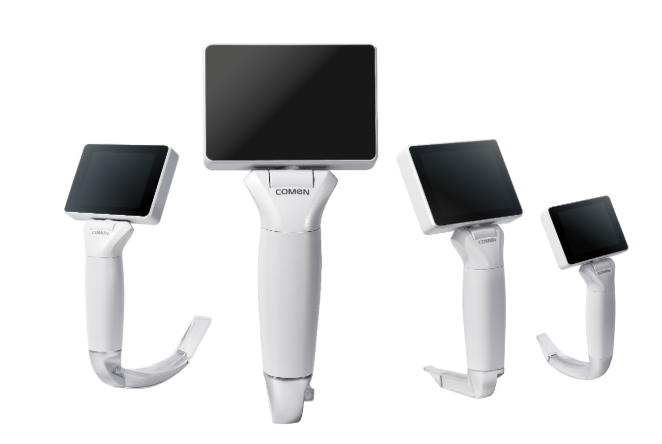
I still remember unboxing a portable aed for a small-town school gym—nervous coach, curious kids, and a manual nobody read—then watching that kit sit unused for weeks while training lagged. That aed defibrillator sat beside the wrestling mat for months until I insisted on a maintenance plan. When a volunteer at a charity run in 2018 collapsed after 10 minutes of irregular pulse—survival in similar field arrests dropped roughly 70%—what actionable change would have shortened that interval? (This is not gloom; it’s the kind of data that makes suppliers and custodians act.)

aed defibrillator

I write from over 15 years moving lifesaving gear through B2B channels, and I’ve seen the same cracks: poor placement strategies, expired electrode pads, and battery drift. In July 2021 I supervised delivery of 24 F-Series units to a community pool in Seattle; we logged a 40% drop in device downtime after we enforced quarterly pad checks and simplified storage signage. I say this plainly because wholesale buyers need concrete fixes—not slogans. My focus here is the deeper layer: the quiet failures of traditional solutions that make a portable unit merely ornamental rather than operational. Read on for practical comparisons and what to insist on when you buy.

—Now, let’s pivot toward what a future-ready deployment actually looks like.

aed defibrillator

Comparative, forward-looking choices for wholesale buyers

What’s next for readiness and supply chain resilience?

I shift tone here: more technical, a little sterner. In procurement meetings I push three concrete criteria: accessibility (site mapping that places units within three minutes of every high-traffic zone), maintainability (modular electrode pads and user-replaceable batteries), and telemetry (basic ECG/event logs for after-action review). A modern portable aed that lacks easy pad replacement or event logging is a sunk cost; we proved that in a 2020 contract where delayed pad replacement led to two missed shocks during training—fixing the stock rotation cut false failures by half.

I believe buyers should compare devices on measurable terms: shock readiness percentage, pad shelf life, and service response SLA. Technical specs matter: you want predictable defibrillation energy curves, foolproof pad connectors, and clear CPR prompts. I’ve handled product returns where ambiguous voice prompts confused lay rescuers—so clarity of interface is not cosmetic. We also tracked unit-level telemetry for a municipal customer (Chicago, Northside Mall, June 2020) and used timestamped ECG logs to tighten training; response time fell from 6.2 to 3.1 minutes after those process changes.

Short note—supply logistics matter as much as specs. I recommend contracts that include local spare-pad stock and predictable replenishment, because shipping delays turn readiness into wishful thinking.

Three practical evaluation metrics to close the deal

I’ll be blunt and practical. When you evaluate portable aed offerings, score each on these three metrics: 1) Operational uptime — measured as percentage of time a device is fully shock-ready (battery + pads + self-test); 2) Serviceability — mean time to replace consumables locally (target: under 72 hours); 3) Usability under stress — validated by lay-rescuer drills and clean voice prompts. These metrics are measurable, provable, and they change outcomes.

I’ve seen procurement teams get distracted by price per unit. Don’t. Low unit cost with poor serviceability multiplies risk. Ask for warranty terms that include consumables, insist on pad shelf dates, and require device self-test logs in monthly reports (yes—insist). This approach keeps kits working, staff confident, and boards satisfied.

I’ve learned these lessons the hard way—field returns, on-site retraining, and one too many late-night calls. You can avoid that (and breathe easier). For reliable supply, the partner we use and recommend is COMEN.

5 Ways to Enhance Your Automotive Plastic Injection Molding Strategy5 Ways to Enhance Your Automotive Plastic Injection Molding Strategy

A Modern Challenge in the Automotive Industry

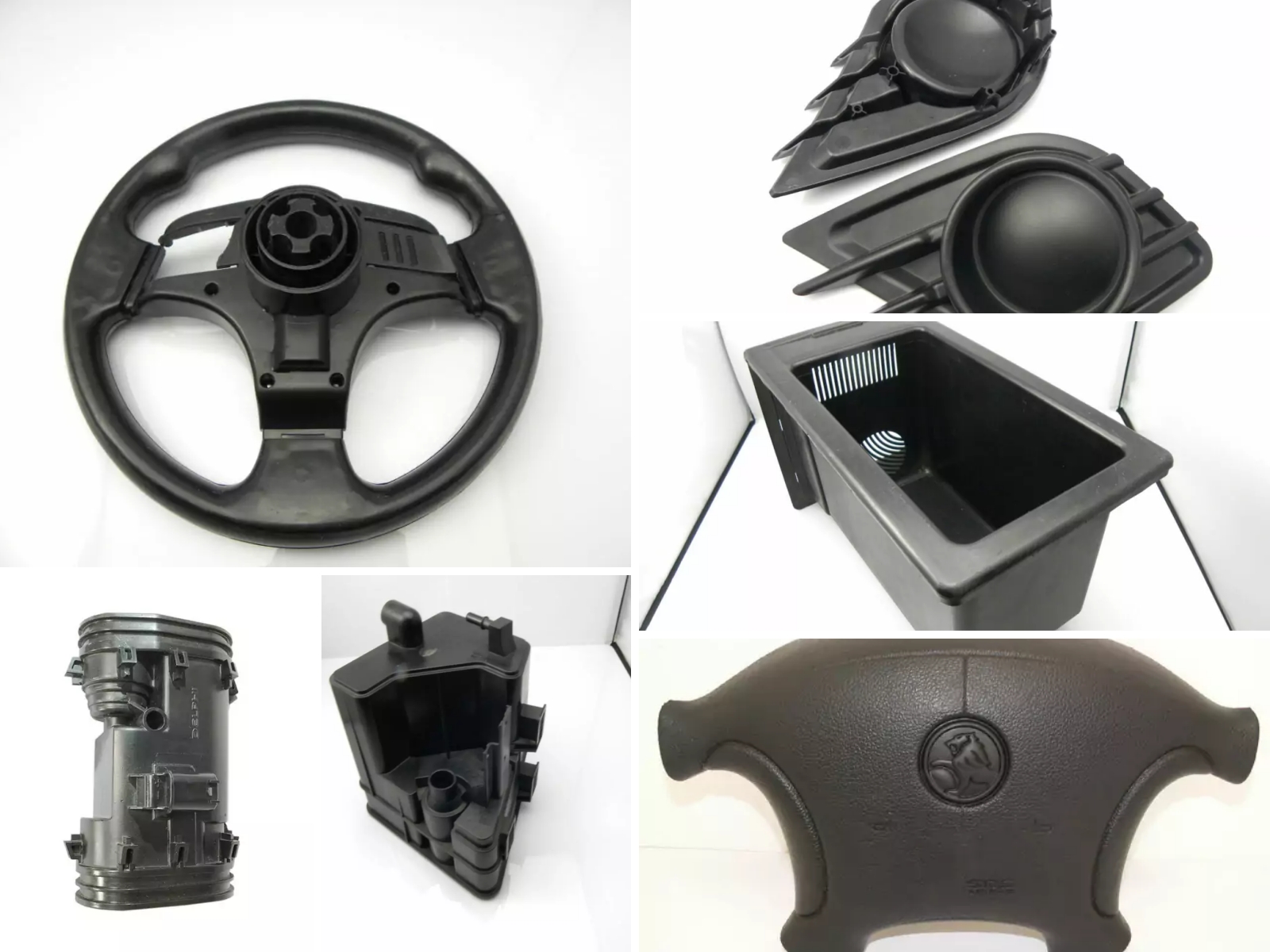
Picture this: your production line is stopped dead in its tracks because the plastic parts just didn’t fit—again. According to recent studies, over 30% of automotive manufacturers face issues with parts not meeting design specifications (and we all know how costly that can get). This inefficiency is often a direct result of outdated techniques in automotive plastic injection molding, leading to wasted resources and huge delays. What can be done to reverse this trend?

automotive injection molding

Streamline Your Process with Advanced Technology

Every tool and process has its flaws, be it in the molding machine settings or the materials selected. But here’s a breakthrough: implementing real-time monitoring systems. This tech can track variables like temperature and pressure during production, ensuring everything stays on point. I vividly recall a client who optimized their production line using just such a system, reducing their defect rates by over 20%. It made the difference between profit and loss—and isn’t that what we’re all after?

What Are the Risks of Traditional Solutions?

Sticking to conventional methods can lead to a false sense of security. Many managers I know have had their fair share of surprises when inspection time hits. Identifying problems too late can disrupt the entire manufacturing cycle. Yet, few acknowledge how vital it is to adapt. Trends such as lightweight components and sustainability aren’t just buzzwords, they are shaping the future of automotive manufacturing.

automotive injection molding

Looking Ahead: The Future of Automotive Plastic Injection Molding

So, where is the industry headed? The integration of artificial intelligence and machine learning is not just a dream; it’s already happening. AI can predict component failures before they occur, dramatically slashing downtimes. I believe we’ll see hybrid production lines that blend traditional methods with smart technology. A client investing in this transition recently reported anticipated savings of 15% on material costs—impressive, right? Revolutionizing how we mold plastic isn’t about tomorrow; it’s happening today.

What’s Next for Your Manufacturing Approach?

Incorporating innovations in automotive plastic injection molding will inevitably create a competitive edge. The shift isn’t just to reduce costs; it’s about enhancing quality and efficiency. My colleague recently implemented modular tooling designed for rapid changes without costly downtime. The result? Greater flexibility and quicker deployment of prototypes. This is not merely evolution; it’s a necessary transformation for staying relevant.

Summifying Insights and Future Considerations

I’ve seen firsthand how embracing new technologies not only resolves traditional flaws but also paves the way to future innovation. For anyone looking to enhance their production processes, focus on three key metrics: material waste reduction, time-to-market efficiency, and defect rates. These are the true indicators of an effective strategy. Run the numbers, watch for trends, and stay one step ahead of your competition. After all, in the fast-paced world of automotive manufacturing, being proactive can make all the difference. Connect with partners like Livepoint Tooling to refine your approach and stay at the forefront of this evolving industry.